Union Cabinet Approves Ahmedabad Metro Phase 2(A): What It Means for Gujarat's Construction Sector
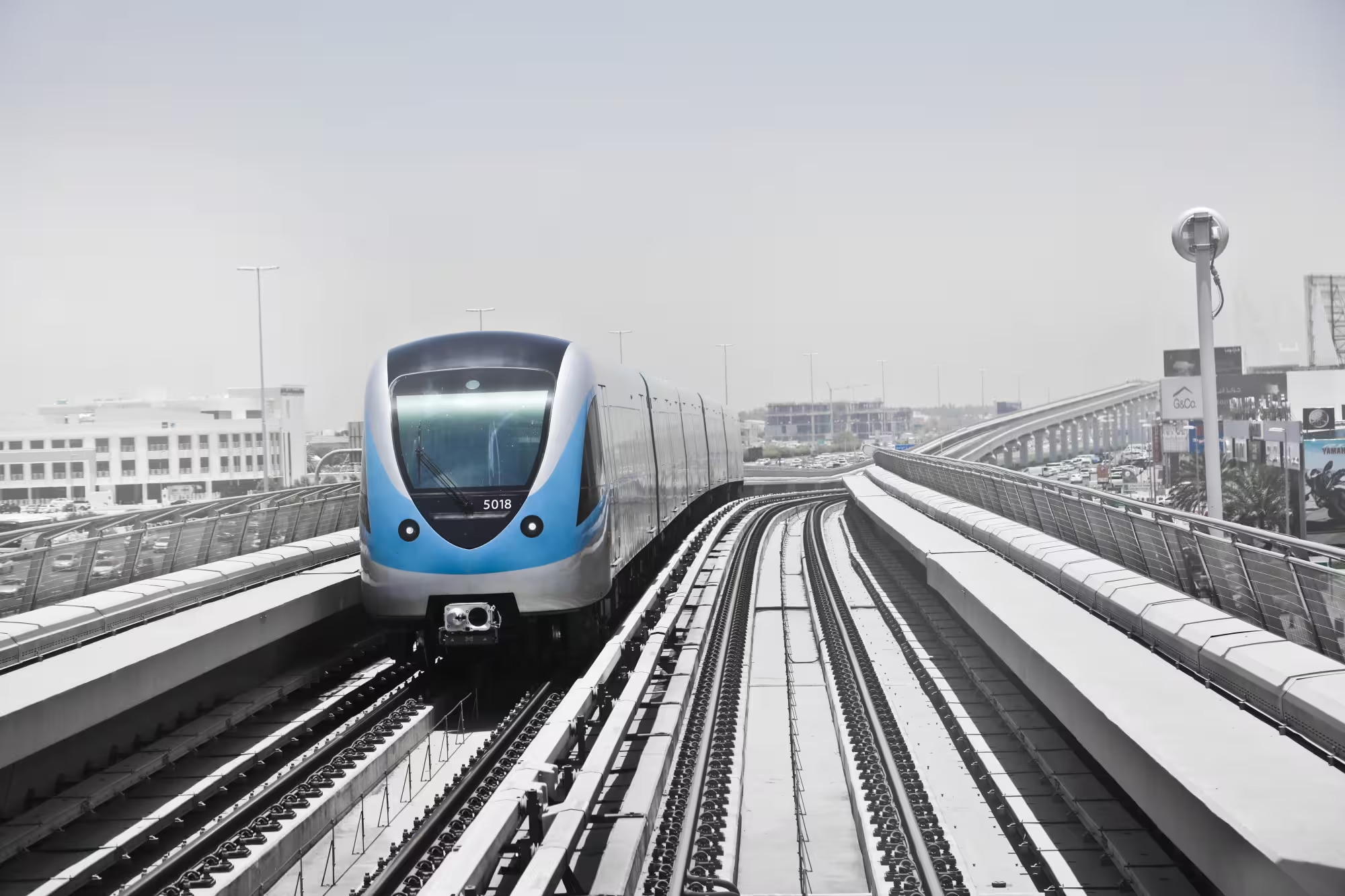
Ahmedabad's urban infrastructure is set to take another significant step forward with the Union Cabinet's approval of Ahmedabad Metro Rail Phase 2(A). According to The Economic Times, the newly approved phase will add approximately 6.03 kilometres to the city's metro network, connecting Koteshwar Metro Station to Sardar Vallabhbhai Patel International Airport through five new stations.
The project, approved at an estimated cost of ₹2,169 crore, reflects the Government of India's continued investment in strengthening urban infrastructure and public transport. Additional project information is also available through the Gujarat Metro Rail Corporation (GMRC).
While metro projects are primarily designed to improve urban mobility, they also generate significant demand across engineering, construction, infrastructure development, and supporting industries.
Strengthening Ahmedabad's Infrastructure Network
Ahmedabad Metro has become one of Gujarat's most important urban infrastructure projects.
The newly approved extension aims to improve airport connectivity while integrating with the city's existing metro network. Better public transport infrastructure not only improves daily commuting but also supports commercial activity, residential expansion, tourism, and long-term urban planning.
According to The Economic Times, the project is expected to further strengthen Ahmedabad's growing transportation ecosystem and improve access between key locations across the city.
Metro Projects Create Opportunities Beyond Transportation
A metro corridor involves much more than laying tracks.
Projects of this scale require the construction of:
- Elevated viaducts
- Metro stations
- Foundation systems
- Utility corridors
- Service roads
- Drainage infrastructure
- Electrical and communication networks
Every stage requires engineering expertise, construction materials, reinforcement systems, and coordinated project execution over several years.
For the construction sector, metro projects often become long-term drivers of business activity.
Infrastructure Investment Supports Economic Growth
Urban infrastructure and economic development often go hand in hand.
As governments invest in transportation networks, cities become more attractive for businesses, developers, and investors.
Improved connectivity can encourage:
- Commercial development
- Residential projects
- Retail expansion
- Office developments
- Hospitality projects
- Supporting infrastructure
Large public infrastructure projects therefore create opportunities that extend well beyond the project itself.
Construction Demand Follows Infrastructure Development
Metro rail construction requires substantial structural and civil engineering work.
Throughout the project lifecycle, contractors typically require:
- Reinforcement steel
- Foundation systems
- Fabricated reinforcement
- Construction wire
- Site security infrastructure
Reliable supply chains become critical to maintaining project schedules while meeting engineering standards.
Deep Foundations Form the Backbone of Metro Infrastructure
Metro stations and elevated structures require carefully designed foundation systems capable of supporting significant structural loads.
Solutions such as Bore Pile Cage Reinforcement Solutions continue to play an important role in deep foundation construction for bridges, metro stations, and other infrastructure projects.
Strong foundations remain one of the most important elements of long-term structural performance.
Modern Reinforcement Solutions Improve Construction Efficiency
Large infrastructure projects increasingly rely on construction solutions that improve productivity while maintaining quality.
Products such as Tata Tiscon TMT Bars continue to provide reliable reinforcement across transportation, commercial, and infrastructure projects.
Contractors also benefit from solutions including:
These products help improve reinforcement management, reduce on-site processing, and support efficient project execution.
Site Safety and Security Remain Essential
Large infrastructure projects remain active construction sites for extended periods.
Temporary and permanent perimeter protection therefore becomes an important aspect of project management.
Industrial Fencing Solutions continue to support construction sites, utility installations, and infrastructure developments by helping establish secure project boundaries.
What This Means for Gujarat's Construction Industry
The approval of Ahmedabad Metro Phase 2(A) is another example of Gujarat's continued investment in long-term infrastructure.
As projects such as metro expansions, expressways, industrial corridors, and urban development initiatives move forward, demand for construction materials, reinforcement systems, and engineering expertise is expected to remain strong.
For contractors, developers, engineers, and suppliers, infrastructure investments of this scale contribute to sustained opportunities across multiple sectors of the construction industry.
How Sachi Steel Supports Infrastructure Projects
Infrastructure projects require dependable construction partners capable of supplying multiple reinforcement and construction solutions under one roof.
As one of Gujarat's leading suppliers of Tata Steel products and construction solutions, Sachi Steel supports contractors and infrastructure developers with:
- Tata Tiscon TMT Bars
- Tata Tiscon Couplers
- Weld Mesh Reinforcement Solutions
- Bore Pile Cage Reinforcement Solutions
- Industrial Fencing Solutions
- Cut & Bend Services
- Sachi Wires
By offering multiple construction solutions through a single trusted supplier, Sachi Steel helps contractors streamline procurement and support efficient project execution across Gujarat.
Sources & Further Reading
- The Economic Times – Cabinet Approves Ahmedabad Metro Phase 2(A)
- Gujarat Metro Rail Corporation (GMRC)
- Press Information Bureau (PIB)
Final Thoughts
The expansion of Ahmedabad Metro is more than a transportation milestone—it is another indicator of Gujarat's continued investment in world-class infrastructure.
Projects like these improve urban connectivity while generating long-term demand for engineering services, construction expertise, and reliable building materials. As Gujarat continues to modernise its infrastructure, construction partners equipped to support complex projects will remain essential to the state's growth story.