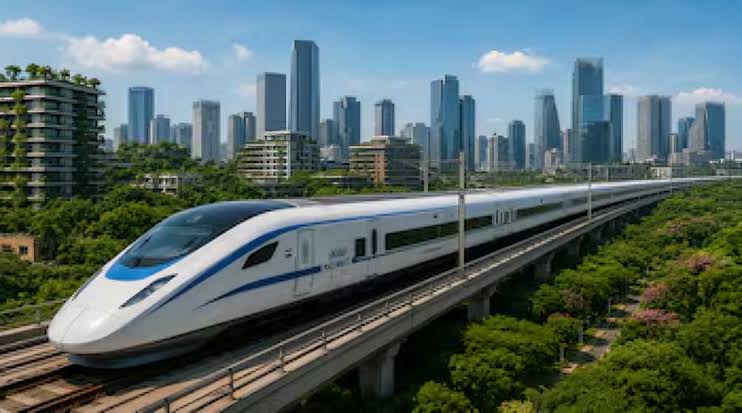
Mumbai–Ahmedabad Bullet Train: Surat–Vapi Civil Works Completed, Marking a Major Gujarat Infrastructure Milestone
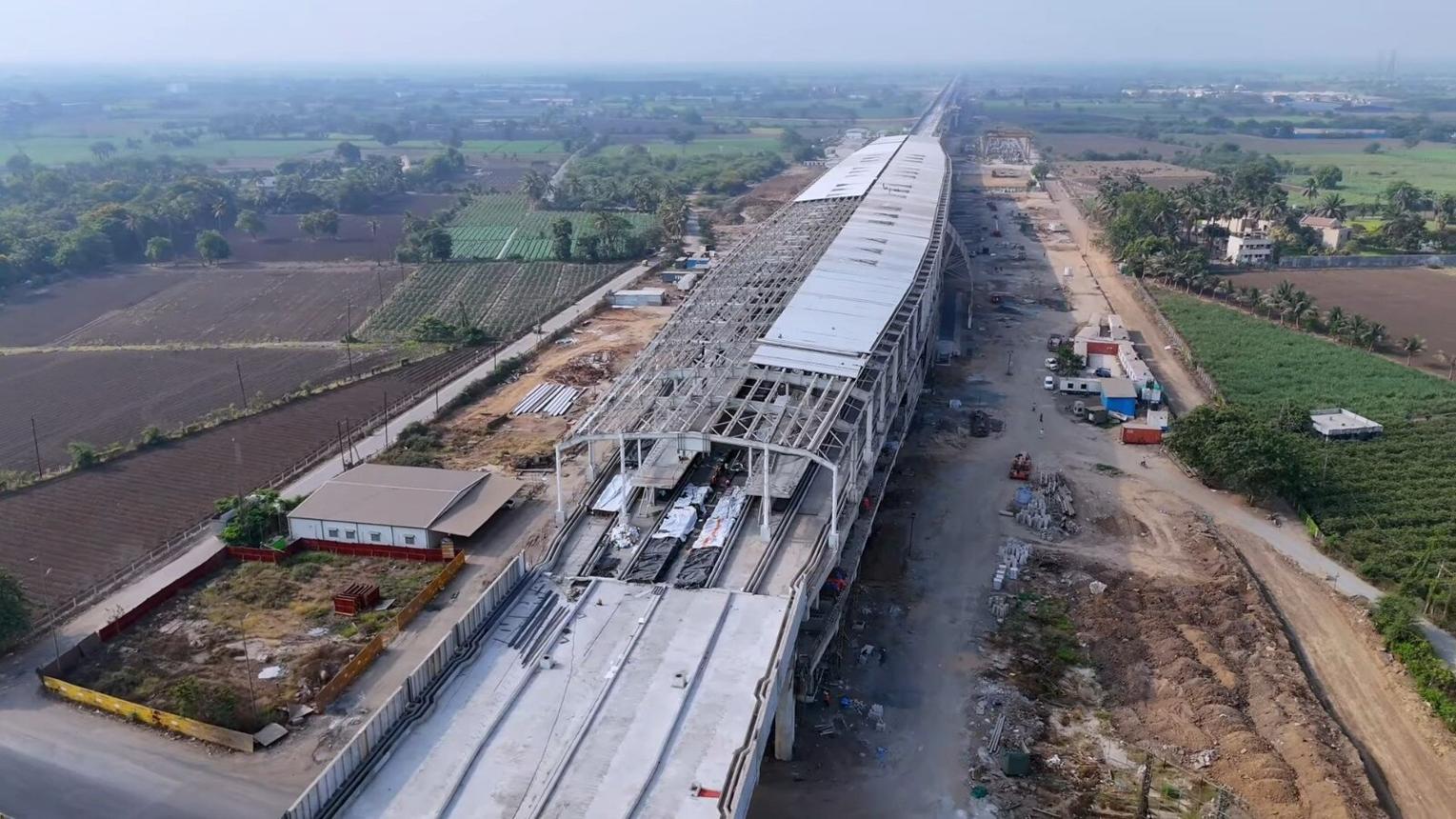
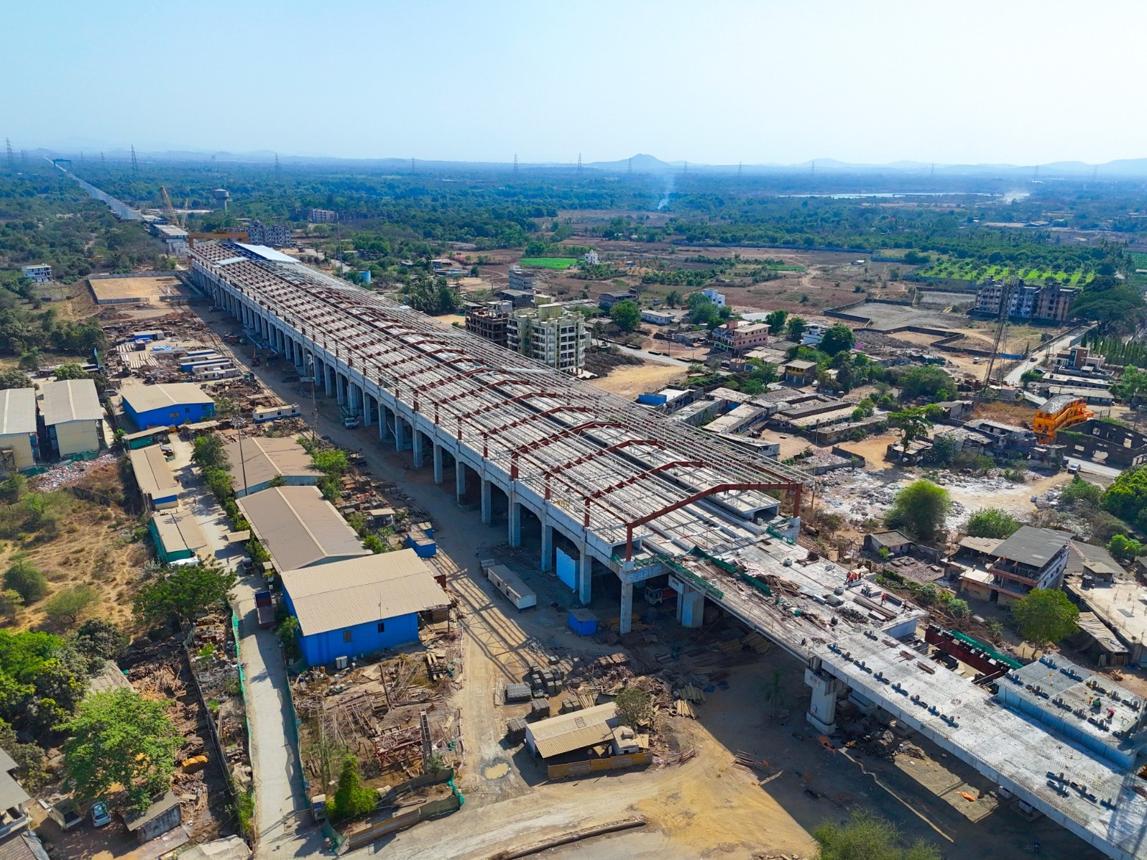
The Mumbai–Ahmedabad High-Speed Rail project has reached another major construction milestone in Gujarat, with the entire civil works on the 97-km Surat–Vapi section completed, including river bridge construction. According to the Ministry of Railways, 87% of the track bed on this section has also been laid.
The development is significant for Gujarat's infrastructure sector because the Surat–Vapi stretch connects several of the state's important industrial and commercial centres while forming part of India's first high-speed rail corridor.
5
What Has Been Completed on the Surat–Vapi Section?
The Surat–Vapi section covers 97 km of the Mumbai–Ahmedabad High-Speed Rail corridor.
The Ministry of Railways has confirmed that:
- The entire civil works on the 97-km section have been completed.
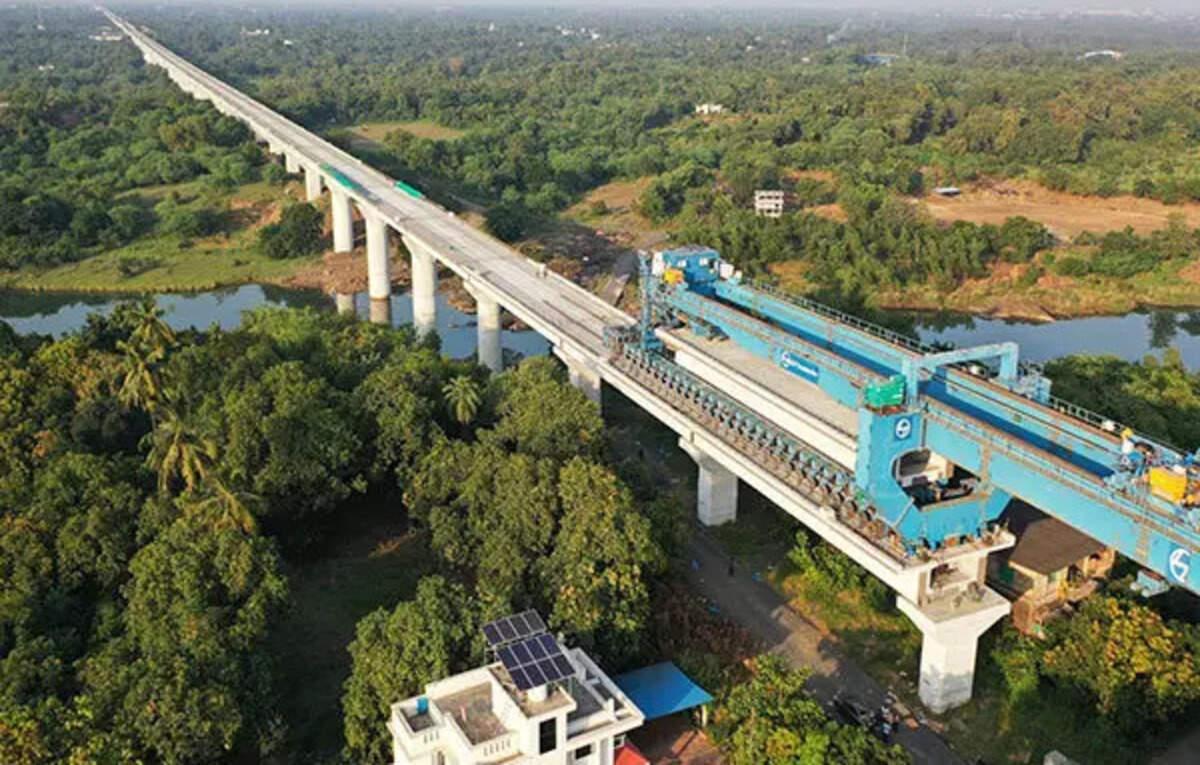
- River bridge construction on the section has also been completed.
- 87% of the track bed has been laid.
- Track and other associated works are continuing as the project moves beyond the civil-construction stage.
The government has also cautioned that completion of the entire Bullet Train project depends on associated works including civil structures, track, electrical systems, signalling and telecommunications, as well as trainset supply. Therefore, completion of the Surat–Vapi civil works should not be interpreted as completion of the entire corridor.
The Mumbai–Ahmedabad High-Speed Rail Corridor at a Glance
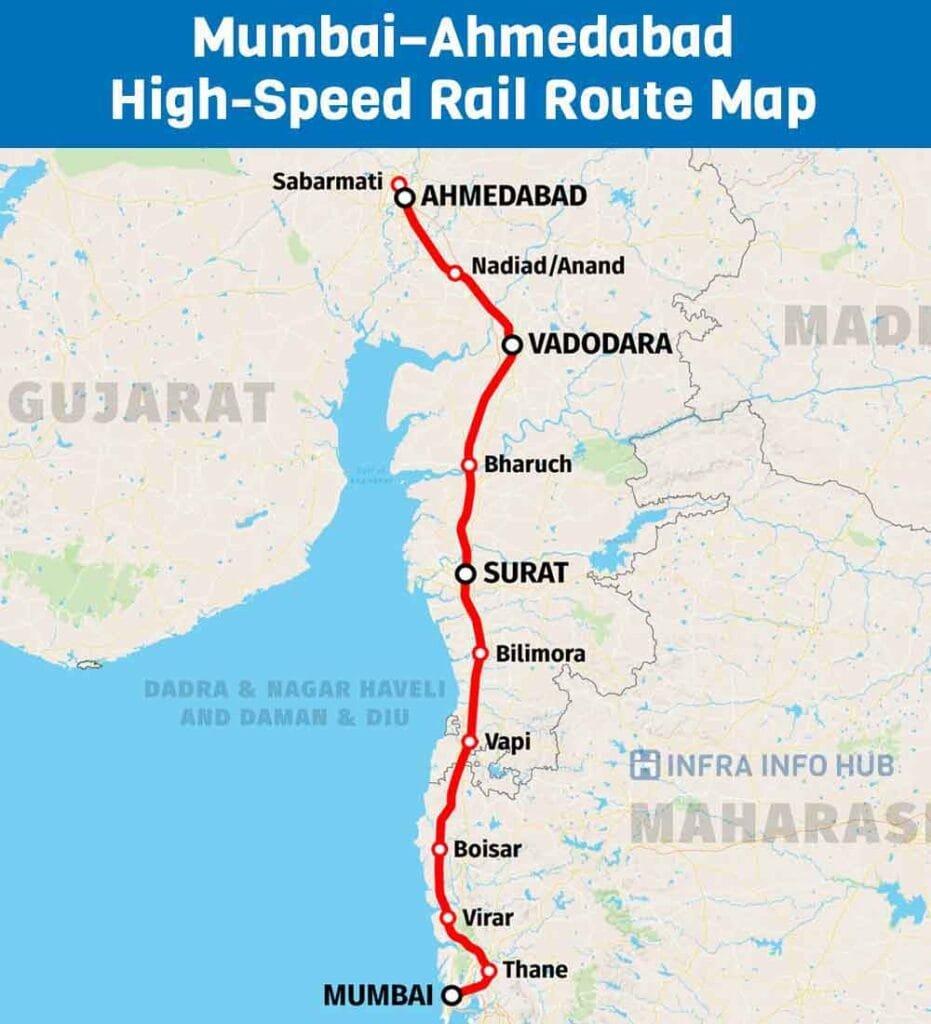
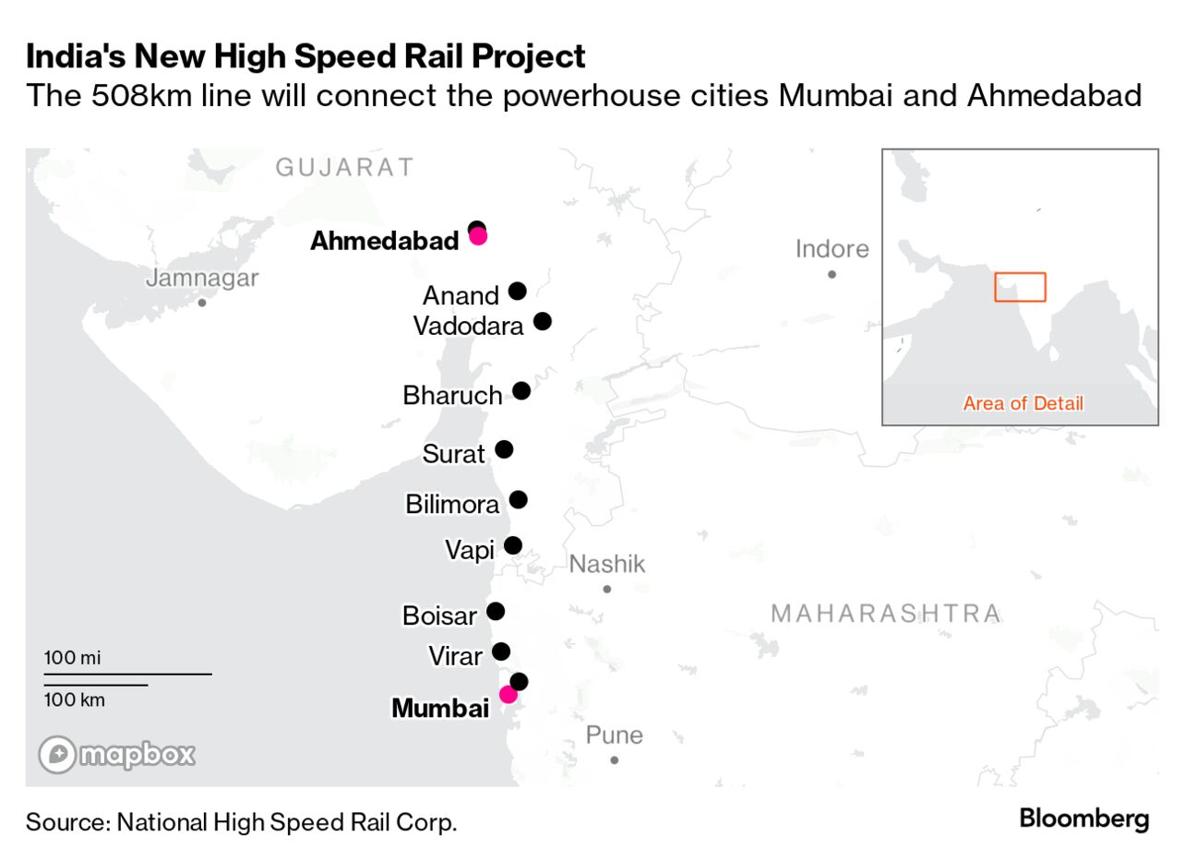
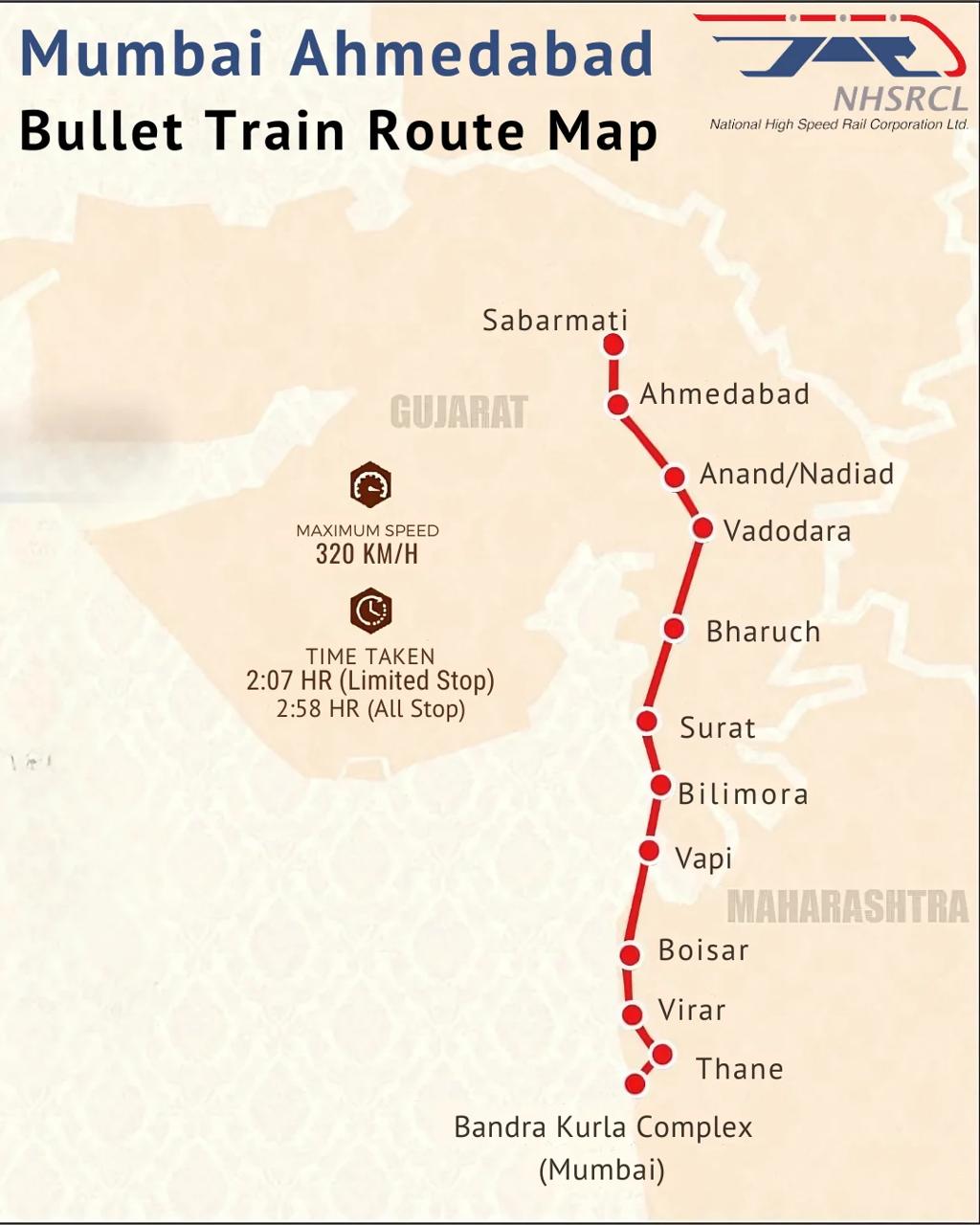
The Mumbai–Ahmedabad High-Speed Rail corridor is approximately 508 km long and is being developed across Gujarat, Maharashtra and the Union Territory of Dadra & Nagar Haveli.
The planned stations are:
- Mumbai
- Thane
- Virar
- Boisar
- Vapi
- Bilimora
- Surat
- Bharuch
- Vadodara
- Anand
- Ahmedabad
- Sabarmati
The project is being developed with Japanese technical and financial assistance and is based on high-speed rail technology derived from the Shinkansen system.
For Gujarat, the corridor creates a major north-south infrastructure spine connecting important economic centres from Vapi through Surat, Bharuch, Vadodara, Anand and Ahmedabad.
4
Why the Surat–Vapi Milestone Matters for Gujarat
The completion of civil works on this section is more than a railway construction milestone.
It demonstrates the scale at which major infrastructure construction is progressing across Gujarat.
The project involves:
- Large-scale viaduct construction
- River bridges
- Foundations and piers
- Track infrastructure
- Stations
- Depots
- Electrical infrastructure
- Signalling systems
- Supporting civil works
This creates demand across a broad construction ecosystem involving engineering companies, contractors, steel suppliers, reinforcement manufacturers, fabrication companies, logistics providers and specialised infrastructure suppliers.
A Project Built Around Large-Scale Civil Construction
The physical scale of the MAHSR project is substantial.
As of the Ministry of Railways' July 2026 update, the Gujarat section had reached 452 km of piers, 356 km of girders, 209 km of track-bed construction and 190 km of overhead electrification masts.
The project also includes numerous river crossings across Gujarat.
The Ministry's latest update records completed bridge construction at several locations, while major works continue on bridges including the Sabarmati, Mahi and Narmada crossings.
This highlights the complexity of infrastructure construction along the corridor.
The Role of Steel and Reinforcement in Large Infrastructure
Projects of this scale require far more than track and rail systems.
Civil infrastructure depends on extensive reinforcement and structural construction at different stages.
Depending on the application and engineering specifications, large infrastructure projects can require:
- Reinforcement steel
- Binding wire
- Weld mesh
- Reinforcement cages
- Pile cages
- Couplers
- Cut & Bend reinforcement
- Structural steel
- Construction fencing
- Concrete-related materials
This is particularly relevant to Gujarat's construction-material ecosystem because the MAHSR corridor passes through regions with significant industrial and manufacturing activity.
For suppliers and contractors, major projects also highlight the importance of consistent production, bulk availability, project-based delivery and the ability to support repeat requirements.
Surat, Vapi and South Gujarat Gain Strategic Importance
The Surat–Vapi stretch passes through one of Gujarat's most economically active regions.
Surat is a major commercial and industrial centre, while Vapi is an established industrial hub. The wider corridor also connects to important economic centres such as Bharuch, Vadodara, Anand and Ahmedabad.
The high-speed rail project is therefore not simply a transport project connecting two cities.
It is creating a new infrastructure link across a series of industrial and commercial markets.
The National High Speed Rail Corporation has previously described the wider corridor as connecting major economic centres including Ahmedabad, Vadodara, Anand, Surat, Vapi and Mumbai.
Construction Technology Is Also Evolving
The MAHSR project has introduced several construction methods and technologies that are relatively new to India's high-speed rail ecosystem.
One example is the project's Japanese-inspired slab-track system.
The Ministry of Railways has reported that two Track Slab Manufacturing Facilities have been established at Kim near Surat and Anand in Gujarat to manufacture the precast track slabs required for the project.
The facilities are designed to manufacture high-grade concrete slabs with precise dimensions and supply them to track-construction bases along the corridor.
This is another example of how major infrastructure projects create specialised manufacturing and construction capabilities within Gujarat.
The Project Is Moving Beyond Civil Construction
While civil construction remains a major component, the project is increasingly moving into track, electrical and systems-related work.
The Ministry of Railways has reported that electrification work is progressing on the corridor using a 2×25 kV overhead traction system, which is being introduced in India for high-speed rail. The project includes traction substations and a large network of overhead electrification infrastructure.
The Ministry has also stated that the first high-speed rail service is expected to commence in August 2027, with the first section planned to be the Surat–Vapi stretch.
However, the government has emphasised that the overall timeline depends on completion of all associated civil, track, electrical, signalling, telecommunications and trainset-related work.
What This Means for Gujarat's Construction Industry
The Surat–Vapi milestone offers a useful indicator of where Gujarat's infrastructure economy is heading.
Large projects are increasingly requiring suppliers that can handle:
Large Quantities
Infrastructure construction often requires materials in volumes significantly greater than conventional individual building projects.
Consistent Production
Material specifications need to remain consistent across long project durations and multiple construction packages.
Scheduled Delivery
Construction materials must arrive according to project schedules rather than simply being available for immediate purchase.
Fabrication Capability
Some reinforcement requirements need to be fabricated according to project drawings and engineering specifications.
Gujarat-Wide Logistics
Projects can extend across several districts, making transportation and supply coordination critical.
These requirements are relevant not only to the Bullet Train project but also to Gujarat's broader infrastructure, industrial and renewable-energy development.
What the Bullet Train Means for Construction Material Demand
The MAHSR project is one part of a much larger infrastructure investment cycle in Gujarat.
The state is simultaneously seeing development across:
- High-speed rail
- Metro infrastructure
- Industrial corridors
- Warehouses and logistics parks
- Manufacturing facilities
- Renewable-energy projects
- Roads and bridges
- Urban infrastructure
Together, these projects create continuing demand for construction and reinforcement products.
For builders and contractors, this increases the importance of working with suppliers capable of providing products such as Sachi Wires, Weld Mesh, Bore Pile Cages and Industrial Fencing Solutions alongside other reinforcement requirements.
Why Infrastructure Projects Need Organised Construction-Material Supply
Large infrastructure projects demonstrate why construction-material procurement is increasingly moving toward organised suppliers.
A contractor may need different products at different stages:
TMT → Binding Wire → Weld Mesh → Fabricated Reinforcement → Pile Cages → Fencing
Coordinating each requirement through separate suppliers can increase procurement complexity.
An established construction-material partner can instead support multiple requirements while coordinating supply according to the project's schedule.
Sachi Steel's wider portfolio includes Tata Tiscon TMT Bars, Sachi Wires, Weld Mesh, Tata Tiscon Couplers, Cut & Bend Services, Bore Pile Cages and Industrial Fencing Solutions.
Why This Development Matters to Gujarat's Builders and Contractors
The completion of civil works on the Surat–Vapi section is an important indicator of the maturity of Gujarat's high-value infrastructure pipeline.
It demonstrates three things clearly.
Large Infrastructure Is Moving Into Advanced Construction Stages
The project is progressing beyond foundations and primary civil works into track, electrification and systems.
Gujarat Is Becoming a Major Infrastructure Manufacturing Base
Facilities for specialised track components, steel structures and other construction systems are being established within the state.
Construction Supply Chains Need to Scale With Projects
As projects become larger and more technically demanding, suppliers need to provide consistent materials, fabrication capabilities, bulk production and reliable logistics.
For Gujarat's construction industry, these requirements are likely to remain relevant well beyond the Bullet Train project.
What Comes Next for the Mumbai–Ahmedabad Bullet Train?
The completion of the Surat–Vapi civil works does not mark the end of construction.
The remaining work includes continued track installation, electrical systems, signalling and telecommunications, as well as other associated infrastructure and trainset-related requirements.
The government currently expects the first high-speed rail service to begin in August 2027, with the Surat–Vapi section planned as the first operational section.
As the project moves toward commissioning, Gujarat will continue to see activity across multiple construction and engineering disciplines.
Frequently Asked Questions
What part of the Bullet Train project has been completed?
The entire civil works, including river bridge construction, on the 97-km Surat–Vapi section have been completed. The Ministry of Railways reported that 87% of the track bed on the section had also been laid.
Is the entire Mumbai–Ahmedabad Bullet Train project complete?
No. The overall 508-km project still has associated civil, track, electrical, signalling, telecommunications and trainset-related work to complete.
Which cities in Gujarat will the Bullet Train connect?
The planned Gujarat stations include Vapi, Bilimora, Surat, Bharuch, Vadodara, Anand, Ahmedabad and Sabarmati.
When is the first Bullet Train service expected?
The Ministry of Railways currently states that the first high-speed rail service is expected to commence in August 2027, with Surat–Vapi planned as the first section to open.
Why is the Surat–Vapi section important?
It is a 97-km section in Gujarat where civil works have been completed, including river bridges, while track-bed construction is already substantially advanced. It is also planned to be the first section to begin high-speed rail operations.
Conclusion
The completion of civil works on the Surat–Vapi section of the Mumbai–Ahmedabad High-Speed Rail project marks an important milestone for Gujarat's infrastructure sector.
With the 97-km section's civil and river-bridge works completed and track-bed construction substantially advanced, the project is entering increasingly specialised stages involving track, electrification, signalling and other systems.
For Gujarat's broader construction industry, the development is significant beyond the railway itself.
It demonstrates the scale of infrastructure being built across the state and the growing requirement for organised steel, reinforcement, fabrication, construction-material and logistics supply chains capable of supporting large, long-duration projects.
As Gujarat continues to expand its infrastructure and industrial base, developments such as the Mumbai–Ahmedabad Bullet Train will remain important indicators of the state's evolving construction economy.
Official Sources
- Ministry of Railways / Press Information Bureau — July 2026 MAHSR progress update
- Ministry of Railways — Mumbai–Ahmedabad High-Speed Rail project overview
- National High Speed Rail Corporation Limited
- Ministry of Railways — Track installation and slab manufacturing facilities
- Ministry of Railways — MAHSR electrification update