Mumbai–Ahmedabad Bullet Train Project Reaches 80% Completion: What It Means for Gujarat’s Construction Sector
A Major Milestone for India’s First Bullet Train Project
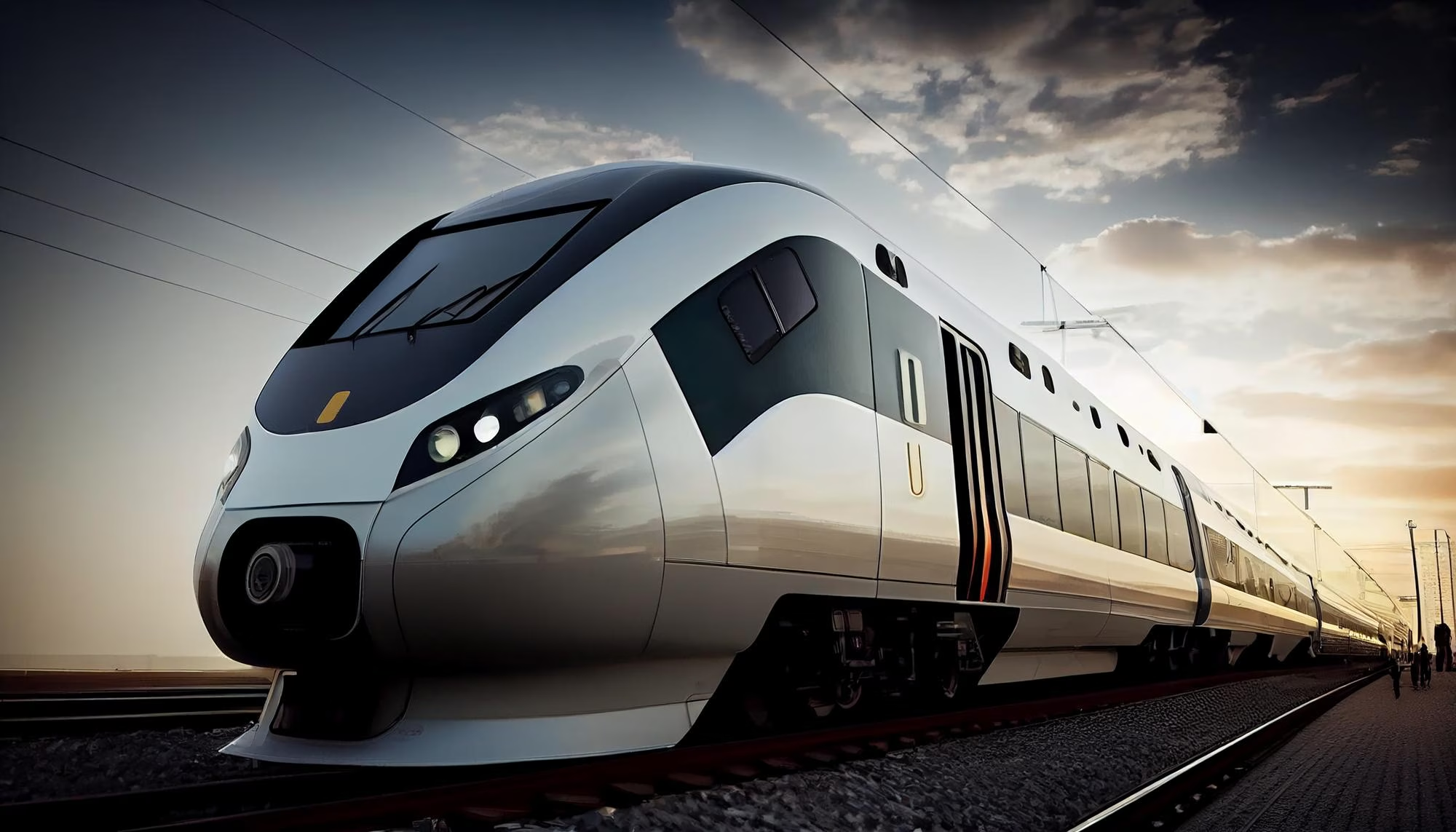
The Mumbai–Ahmedabad Bullet Train project has been under development as India’s first high-speed rail corridor.
As reported by The Times of India, the project is approaching 80% completion, while work continues across multiple sections of the corridor.
The first operational section between Surat and Bilimora is expected to provide an important demonstration of high-speed rail technology in India before services expand across the wider corridor.
The project connects major locations including Surat, Bharuch, Vadodara, Anand, Ahmedabad, and other regions along Gujarat’s growing urban and industrial corridor.
Why the Bullet Train Project Matters for Gujarat
Gujarat has experienced significant infrastructure and industrial development over the past several years.
Major projects across the state include expressways, metro networks, industrial corridors, manufacturing facilities, ports, renewable energy projects, and urban infrastructure.
The Mumbai–Ahmedabad Bullet Train adds another major transportation network to this growing infrastructure ecosystem.
Improved connectivity between major economic centres can support:
- Business travel
- Industrial development
- Commercial growth
- Real estate development
- Tourism
- Logistics infrastructure
- Urban expansion
As transportation networks improve, areas surrounding major stations and infrastructure corridors can also attract additional private investment and development.
Large Infrastructure Projects Require Complex Construction Systems
A high-speed rail corridor involves significantly more than tracks and trains.
The Mumbai–Ahmedabad Bullet Train project includes the construction of elevated viaducts, bridges, stations, tunnels, foundations, utility infrastructure, and supporting facilities.
Projects of this scale require extensive coordination between engineers, contractors, manufacturers, construction companies, and material suppliers.
They also demonstrate the growing importance of modern construction methods capable of supporting large and technically demanding infrastructure developments.
Deep Foundations Play a Critical Role in Major Infrastructure
Large infrastructure structures require foundation systems capable of supporting significant loads over long periods.
Bridges, viaducts, stations, and other major structures may require carefully engineered deep foundation systems depending on site and structural requirements.
Solutions such as Bore Pile Cage Reinforcement are used across various infrastructure, industrial, and large-scale construction applications where deep foundation reinforcement is required.
As Gujarat continues investing in major infrastructure projects, demand for reliable and efficiently manufactured reinforcement solutions remains important for the wider construction industry.
Modern Infrastructure Demands Efficient Reinforcement Solutions
The scale of modern infrastructure projects has also increased the importance of construction efficiency.
Contractors working on large developments must manage significant quantities of reinforcement while maintaining project schedules and engineering requirements.
Solutions such as Tata Tiscon Couplers can support suitable reinforcement applications, while Cut & Bend Services help reduce the need for extensive steel processing at construction sites.
Similarly, Weld Mesh Reinforcement Solutions can support a variety of construction and reinforcement applications where project specifications require factory-manufactured mesh.
These solutions reflect a wider shift towards more organised and efficient construction practices across India.
Infrastructure Development Creates Opportunities Beyond the Project Itself
The economic impact of a major infrastructure project often extends beyond its immediate construction requirements.
Improved connectivity can encourage new development around stations, transportation corridors, and surrounding urban areas.
This can contribute to demand for:
- Residential projects
- Commercial developments
- Hotels and hospitality
- Industrial facilities
- Logistics infrastructure
- Supporting roads and utilities
- Public infrastructure
For Gujarat, cities such as Surat, Bharuch, Vadodara, Anand, and Ahmedabad are already important centres of industrial and urban growth.
The development of high-speed rail infrastructure can further strengthen connectivity between these economic regions.
What the Project Says About the Future of Construction in India
The Mumbai–Ahmedabad Bullet Train is also an example of how the scale and technical complexity of Indian infrastructure projects are evolving.
Future infrastructure development will increasingly require:
- Advanced engineering capabilities
- Efficient construction processes
- Reliable material supply
- Greater use of prefabrication
- Specialised reinforcement solutions
- Stronger coordination across construction supply chains
For contractors and construction companies, adapting to these changing requirements will become increasingly important.
The companies supporting these projects must also be capable of providing dependable products, technical understanding, and supply capabilities aligned with demanding project schedules.
Gujarat’s Infrastructure Pipeline Continues to Expand
The Bullet Train project is part of a much wider infrastructure transformation taking place across Gujarat.
The state is witnessing continued development across transportation, industrial manufacturing, urban infrastructure, renewable energy, commercial real estate, and public infrastructure.
As projects move from announcements and planning towards actual execution, the construction ecosystem supporting them becomes increasingly important.
Contractors require dependable access to reinforcement materials, fabricated products, foundation systems, construction wires, and site infrastructure solutions throughout different stages of project execution.
How Sachi Steel Supports Gujarat’s Construction and Infrastructure Growth
As one of Gujarat’s largest suppliers of Tata Steel products and a comprehensive provider of construction solutions, Sachi Steel supports residential, commercial, industrial, and infrastructure projects across the state.
Depending on project requirements, contractors and developers can source Tata Tiscon Couplers, Weld Mesh Reinforcement Solutions, Bore Pile Cage Reinforcement, Industrial Fencing Solutions, Cut & Bend Services, and Sachi Wires through a single experienced construction partner.
Sachi Steel’s comprehensive product portfolio helps contractors simplify procurement while supporting the changing requirements of modern construction projects across Gujarat.
As infrastructure projects become larger and more technically demanding, reliable construction supply partners will continue to play an important role in supporting Gujarat’s development.
Sources & Further Reading
The latest project milestone and expected 2027 opening of the Surat–Bilimora section were reported by The Economic Times – Mumbai–Ahmedabad Bullet Train Project 80% Complete.
Readers can also follow official project information and construction updates through the National High Speed Rail Corporation Limited.
Final Thoughts
The Mumbai–Ahmedabad Bullet Train project reaching nearly 80% completion represents an important milestone for one of India’s most ambitious infrastructure developments.
Beyond the introduction of high-speed rail, the project demonstrates the scale, engineering capabilities, and construction systems required to deliver the next generation of infrastructure in India.
For Gujarat, improved connectivity between major cities and economic centres has the potential to support continued industrial development, urban growth, commercial investment, and construction activity.
As the first section moves closer to its expected opening in 2027, the project will remain one of the most closely watched infrastructure developments in the country—and an important example of how large-scale infrastructure is shaping the future of Gujarat’s construction sector.