
Indian Railways Approves ₹153 Crore Four-Lane ROB at Geratpur–Ahmedabad: What It Means for Gujarat Infrastructure
Indian Railways has approved the construction of a four-lane Road Over Bridge (ROB) at Level Crossing No. 305 on the Geratpur–Ahmedabad section of Western Railway in Gujarat, with a sanctioned cost of ₹153 crore.
The approval was announced by the Ministry of Railways on 12 August 2026 and is part of Western Railway's broader programme covering road over bridges, road under bridges, foot over bridges, drainage improvements and reconstruction of existing structures.
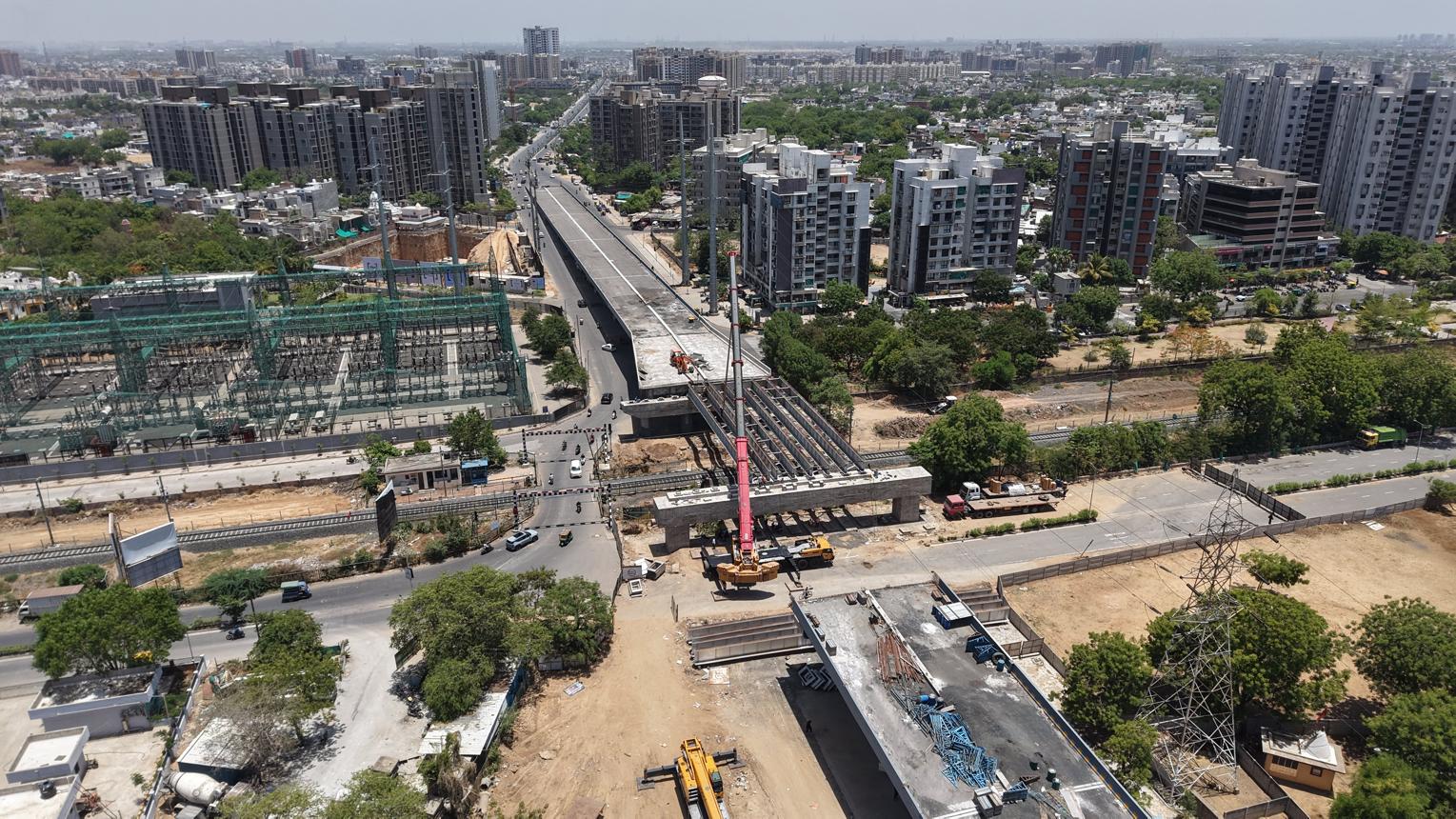
The new ROB is planned in a densely populated urban area, where longer approaches and a larger structure are required. The railway bridge itself will span 106 metres, comprising two 53-metre composite girders. A 150-metre viaduct will follow, while the railway approach will extend for approximately 595 metres.
What Has Indian Railways Approved?
The approved project involves replacing the existing level crossing at Level Crossing No. 305 on the Geratpur–Ahmedabad railway section with a four-lane ROB.
According to the Ministry of Railways, the project includes:
- Four-lane Road Over Bridge
- 106-metre railway bridge portion
- Two 53-metre composite girders
- 150-metre viaduct
- Approximately 595-metre railway approach
- Construction under Western Railway's umbrella programme
- Sanctioned cost of ₹153 crore
The project is intended to allow road traffic to cross the railway line without waiting for trains to pass through the level crossing.
Why Is the Geratpur ROB Needed?
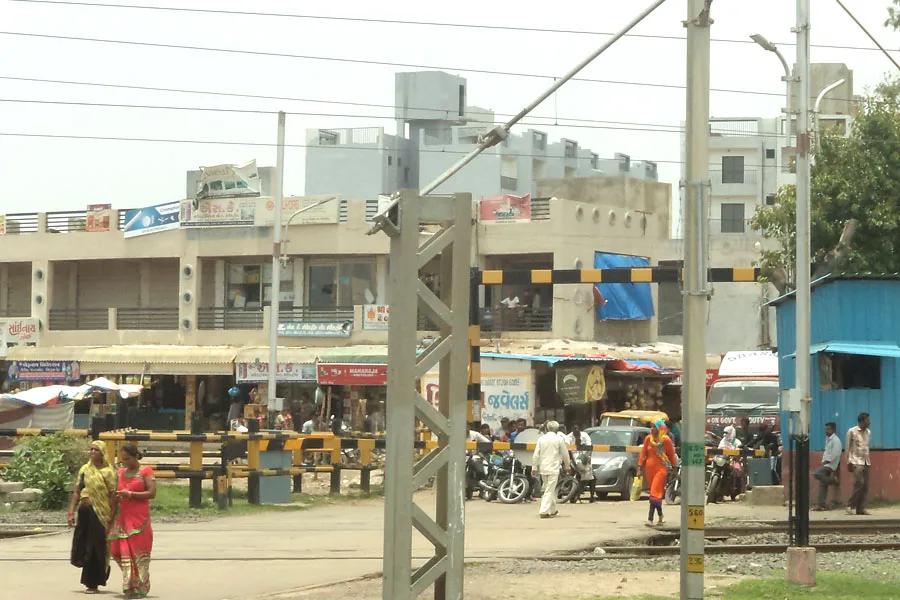
The existing crossing is located in a densely populated urban area.
As road and rail traffic interact at the same level, vehicles have to stop whenever trains pass through the crossing. This can create queues, delays and safety concerns, particularly as traffic volumes increase.
The proposed grade-separated ROB will separate road and railway traffic.
Once completed, vehicles will be able to cross above the railway line without being interrupted by passing trains.
The Ministry says the project is expected to provide:
- Safer road movement
- Reduced waiting time
- Smoother traffic flow
- Relief from congestion
- Improved connectivity for local commuters
Understanding the Scale of the Proposed Structure
Although ₹153 crore is the headline project value, the physical dimensions provide a better indication of the construction involved.
106-Metre Railway Bridge
The railway portion will have a total length of 106 metres.
It will consist of two composite girders, each measuring 53 metres.
150-Metre Viaduct
The bridge section will be followed by approximately 150 metres of viaduct.
595-Metre Approach
The railway approach is expected to extend approximately 595 metres.
The longer approach is necessary because the project is located within an already developed urban environment.
Together, these components make the project considerably more than a simple bridge replacement.
What Is a Road Over Bridge?
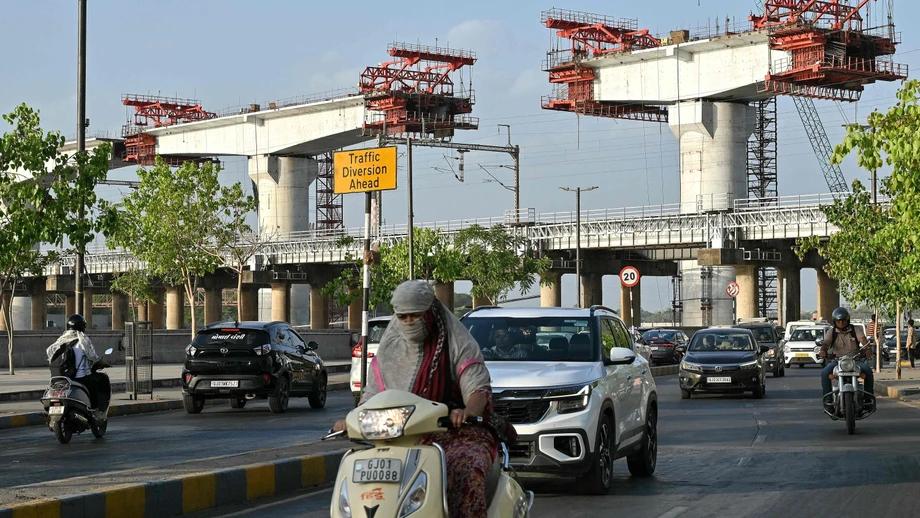
A Road Over Bridge, or ROB, is a grade-separated structure that carries road traffic above a railway line.
Instead of allowing roads and railway tracks to intersect at the same level, the bridge separates the two modes of transport.
This means:
Trains can continue operating → vehicles can continue moving → level-crossing waiting is eliminated.
For urban areas experiencing increasing traffic, grade separation can therefore improve both road efficiency and railway safety.
Geratpur–Ahmedabad Is Part of a Larger Urban Growth Story
The project is significant not only because of the bridge itself but because it is located within Ahmedabad's expanding urban environment.
Infrastructure projects around Ahmedabad increasingly need to account for:
- Growing road traffic
- Expanding residential areas
- Industrial activity
- Logistics movement
- Railway traffic
- Existing utility infrastructure
- Limited urban right-of-way
This makes infrastructure upgrades such as ROBs increasingly important for maintaining connectivity as the city and its surrounding areas develop.
What Does This Mean for Gujarat's Construction Industry?
A project of this scale requires coordination across several construction disciplines.
Depending on the final engineering and construction package, projects involving ROBs can require:
- Reinforcement steel
- Structural steel
- Concrete
- Binding wire
- Weld mesh
- Reinforcement cages
- Cut & Bend reinforcement
- Bearings and bridge components
- Drainage infrastructure
- Road construction materials
- Safety and perimeter systems
The exact material requirements will depend on the final design and tender specifications.
It would therefore be incorrect to assume that any particular supplier or product has been selected for the Geratpur project at this stage.
Why Reinforcement Is Important in Bridge Construction
Road Over Bridges combine several reinforced and structural components.
The foundations, piers, approaches and associated civil structures require engineered reinforcement according to their structural design.
Depending on the specifications, contractors can require products such as Tata Tiscon TMT Bars, Sachi Wires and Weld Mesh.
Where fabricated reinforcement is required, Cut & Bend Services can form part of the reinforcement supply chain.
For foundation packages involving deep foundations, Bore Pile Cages can be relevant where specified by the project's engineering design.
These are existing Sachi Steel product categories and are mentioned here to explain the wider construction-material ecosystem—not to suggest that Sachi Steel has been awarded any part of the Geratpur ROB project.
Why Project-Scale Supply Matters
Large civil projects require a different procurement approach from small construction jobs.
The contractor may need material in planned phases rather than one shipment.
That creates requirements around:
Production
Material needs to be available consistently against project specifications.
Bulk Supply
Large infrastructure packages can require substantial quantities over an extended period.
Fabrication
Certain reinforcement components may need to be prepared according to engineering drawings and schedules.
Delivery
Material needs to arrive according to the construction sequence.
Repeat Supply
As different bridge and approach components progress, additional material requirements can arise.
This is why contractors increasingly evaluate construction-material suppliers on capacity, consistency and delivery capability, rather than simply comparing the lowest initial quotation.
Sachi Steel's Relevance to Gujarat's Infrastructure Ecosystem
Sachi Steel operates within the wider Sachi Group, which has an established history in Gujarat's steel and construction-material sector.
Sachi Agency has more than two decades of experience as an authorised Tata Tiscon distributor in Gujarat.
Sachi Steel Solutions Pvt. Ltd. was established in 2012, expanding the group's capabilities into ready-to-use reinforcement solutions including Cut & Bend reinforcement, Stirrups, Columns, Beams, Piles and Mesh.
The group's wire-product portfolio subsequently expanded through Sachi Wires, covering products such as binding wire, weld mesh and chain link.
This broader ecosystem is relevant to Gujarat's infrastructure market because major projects require suppliers who can support multiple construction-material requirements rather than a single isolated product.
Manufacturing and Delivery Capability for Large Projects
Infrastructure projects such as ROBs require suppliers capable of supporting project-scale procurement.
For Sachi Steel, the relevant capabilities include:
- Manufacturing and fabrication
- Bulk construction-material supply
- Reinforcement products
- Project-oriented dispatches
- Repeat-order support
- Gujarat-wide supply
The company can supply products across categories including Sachi Wires, Weld Mesh, Bore Pile Cages and Industrial Fencing Solutions, alongside Tata Tiscon TMT Bars, Tata Tiscon Couplers and Cut & Bend Services.
As with our other industry updates, no unsupported factory tonnage figure is being stated. Actual production capacity should be confirmed against the requirements of the specific project.
The Wider Importance of Level-Crossing Elimination
The Geratpur project forms part of Indian Railways' broader effort to eliminate level crossings and improve road and rail safety.
The Ministry specifically describes the approved project as part of Western Railway's umbrella work covering:
- Road Over Bridges
- Road Under Bridges
- Foot Over Bridges
- Drainage improvements
- Rebuilding of existing road over and under bridges
This indicates that the Geratpur project is one component of a wider infrastructure programme rather than an isolated bridge project.
What Could Improve After Completion?
The intended benefits are straightforward.
Reduced Waiting at the Level Crossing
Vehicles will no longer need to wait for trains to clear the crossing.
Improved Traffic Flow
Four lanes provide greater road capacity than a conventional two-lane crossing arrangement.
Better Safety
Separating road traffic from railway operations removes the direct conflict between vehicles and trains at the crossing.
More Predictable Travel
For commuters and commercial vehicles, removing railway-gate closures can make travel times more consistent.
The Ministry of Railways specifically identifies safer passage, shorter travel time and congestion relief as expected benefits.
What Happens Next?
The approval represents a sanctioned project, not a completed structure.
The next stages will involve implementation, construction planning, procurement and execution of the approved works.
The Ministry's announcement does not provide a completion date or identify a contractor for the project. Therefore, those details should not be assumed.
The verified facts at present are:
₹153 crore sanctioned → four-lane ROB approved → Level Crossing No. 305 → Geratpur–Ahmedabad section → 106-metre railway bridge → 150-metre viaduct → approximately 595-metre approach.
Frequently Asked Questions
What is the cost of the Geratpur–Ahmedabad ROB?
Indian Railways has sanctioned the project at a cost of ₹153 crore.
Where will the new ROB be built?
It will be constructed at Level Crossing No. 305 on the Geratpur–Ahmedabad section of Western Railway in Gujarat.
How long will the railway bridge be?
The railway bridge portion will have a total length of 106 metres, comprising two 53-metre composite girders.
How long is the proposed viaduct?
The bridge will be followed by a 150-metre viaduct.
How long will the railway approach be?
The railway approach is planned to extend for approximately 595 metres.
Why is the ROB being constructed?
The project is intended to eliminate waiting at the existing level crossing, improve road safety, reduce congestion and allow uninterrupted movement of road traffic.
Has construction started?
The Ministry announcement confirms approval and sanction of the project. It does not state that construction has already begun.
Is Sachi Steel involved in the Geratpur ROB project?
There is no verified official information establishing Sachi Steel as a supplier or contractor for this project. Sachi Steel's products are mentioned only as examples of construction-material categories relevant to the broader infrastructure sector.
Conclusion
The approval of a ₹153 crore four-lane Road Over Bridge at Geratpur on the Ahmedabad section of Western Railway is another example of Gujarat's continuing investment in grade-separated and urban transport infrastructure.
The proposed structure will include a 106-metre railway bridge, 150-metre viaduct and approximately 595 metres of approach, creating a significantly larger grade-separated connection in an urban environment.
For Gujarat's construction industry, projects like this demonstrate the increasing need for coordinated supply of reinforcement, fabricated steel, concrete-related materials, drainage systems and supporting infrastructure.
For companies operating in the construction-material sector, the broader opportunity lies not in any single bridge but in the continued expansion of Gujarat's infrastructure pipeline.
Sachi Steel's portfolio—including Sachi Wires, Weld Mesh, Bore Pile Cages, Tata Tiscon TMT and Cut & Bend—positions the company within this wider construction-material ecosystem.
Official source
A secondary Ahmedabad report from The Times of India also independently reports the ₹153 crore sanction and the 106 m + 150 m + 595 m structure, consistent with the Ministry's announcement.