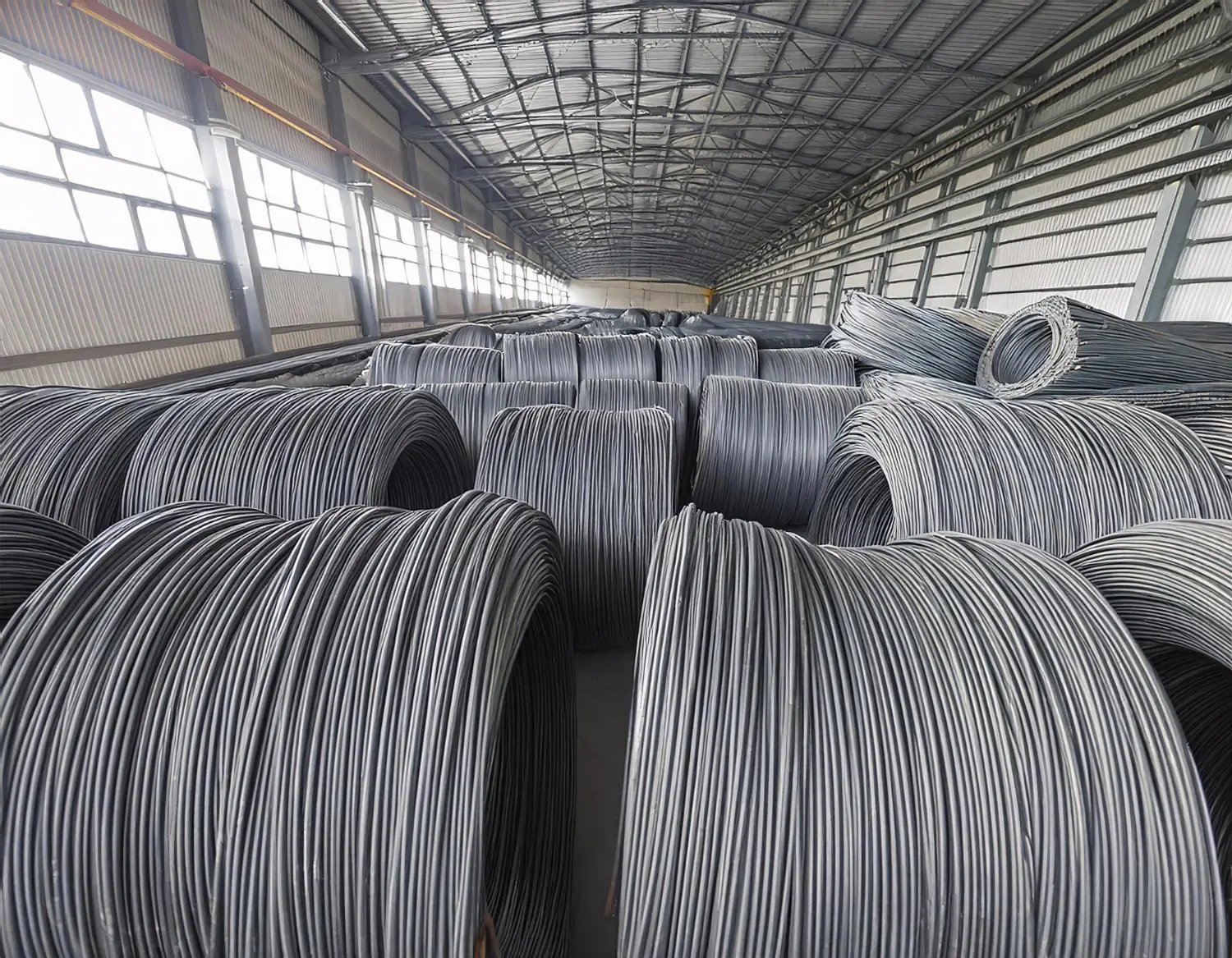
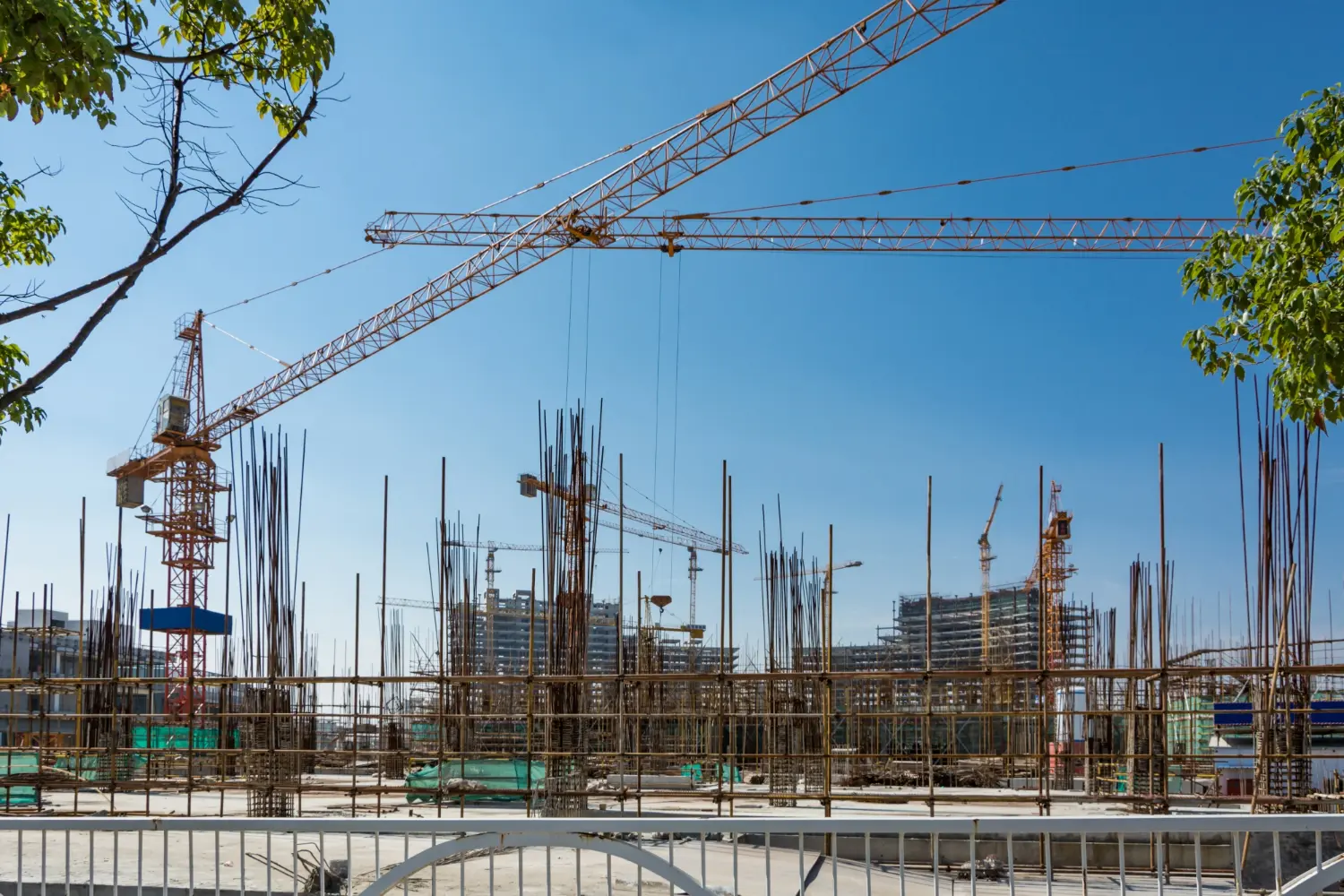
Binding wire is one of the smallest materials used on a construction site, but it plays an essential role in reinforcement work. It is used to tie reinforcement bars at their intersections, maintain the required reinforcement arrangement and hold cages and assemblies in position before and during concreting.
With India's construction and infrastructure sector consuming large volumes of reinforcement steel, demand for reliable binding wire manufacturers and bulk suppliers continues to grow. The market includes dedicated wire manufacturers, steel companies, regional suppliers and large construction-material distributors. Current Indian supplier listings also show binding wire being offered in multiple gauges, finishes, coil sizes and specifications for reinforcement and construction applications.
For contractors, builders, infrastructure companies and procurement teams, however, finding a binding wire manufacturer in India should not be based only on price per kilogram.
The manufacturer needs to be evaluated on product consistency, wire specification, workability, manufacturing capability, quantity availability, packaging and the ability to support project-scale requirements.
This guide explains what buyers should look for when evaluating binding wire manufacturers in India and where Sachi Steel fits within the country's construction-material supply ecosystem.
What Is Binding Wire Used for in Construction?
Binding wire is primarily used to tie reinforcement bars together at their intersections.
It helps keep reinforcement in the required position during:
- Reinforcement fabrication
- Transportation and handling of reinforcement cages
- Formwork preparation
- Concrete placement
- RCC construction
It is commonly used for:
- Footings
- Columns
- Beams
- Slabs
- Rafts
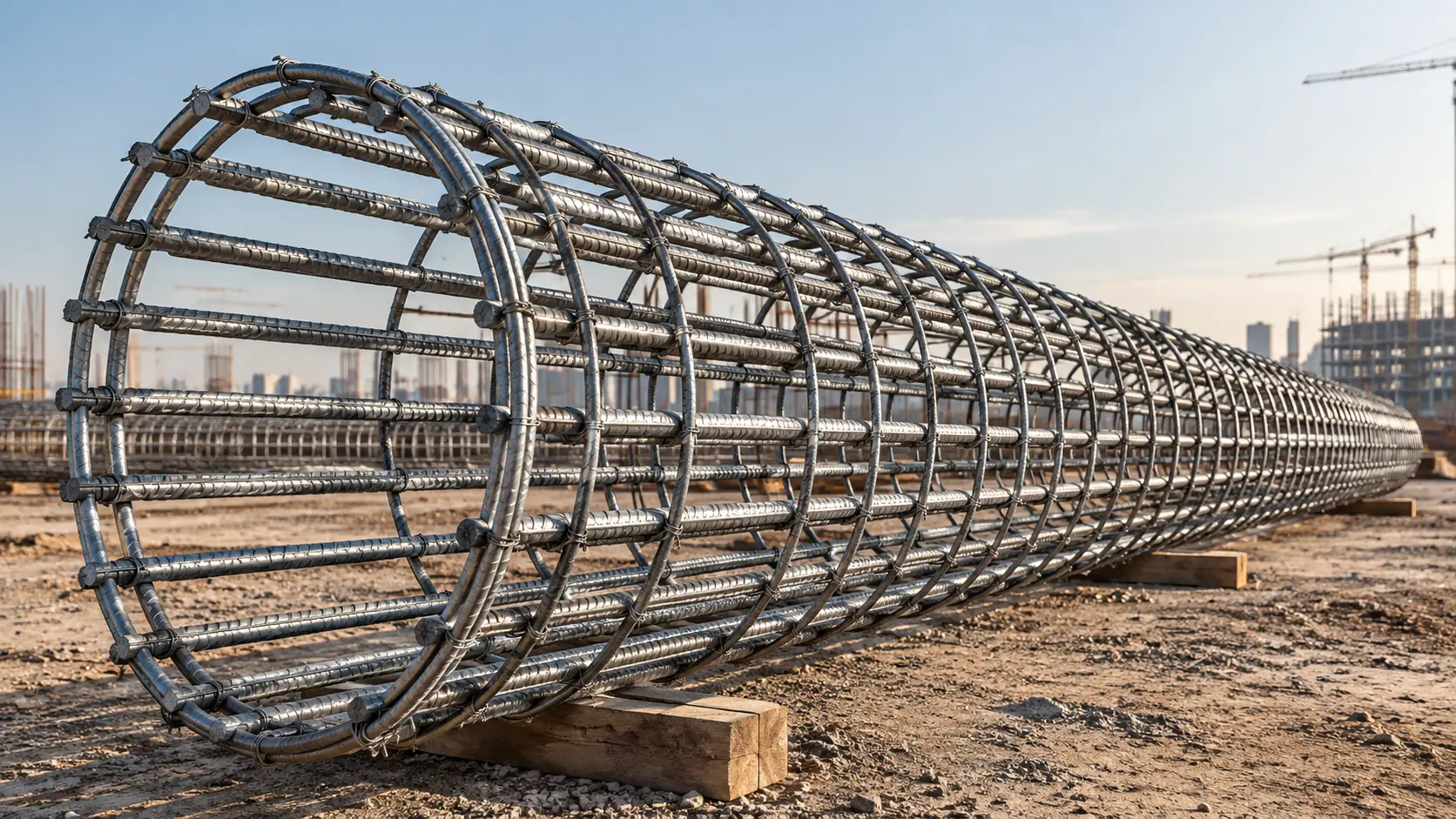
- Pile reinforcement
- Foundation cages
- Precast reinforcement
- General reinforcement fastening
Binding wire itself is not structural reinforcement steel. Its purpose is to hold reinforcement assemblies together during construction.
Sachi Steel's Sachi Wires portfolio includes binding wire intended for rebar tying, foundation cages, boundary meshes and general construction fastening.
Why Choosing the Right Binding Wire Manufacturer Matters
Binding wire is often treated as a commodity product because it is inexpensive compared with TMT bars or other reinforcement materials.
For a large construction project, that approach can create procurement problems.
A project may require binding wire continuously for months, across multiple reinforcement activities. Inconsistent diameter, unsuitable workability, poor packaging or interruptions in supply can create unnecessary problems at site level.
A reliable manufacturer or project supplier should therefore be able to provide:
- Consistent wire specifications
- Appropriate flexibility and workability
- Reliable manufacturing
- Required quantities
- Suitable packaging
- Repeat-order capability
- Predictable delivery
- Product documentation where required
- Support for project-specific requirements
This becomes especially important when the requirement moves from a few coils to bulk construction supply.
What Makes a Good Binding Wire Manufacturer in India?
There is no single characteristic that determines whether a manufacturer is suitable for a project.
Procurement teams should evaluate several factors together.
Manufacturing Capability
The first question is whether the supplier actually has the manufacturing or processing capability required for the order.
A project requiring regular bulk deliveries needs more than a supplier who can source a few coils from the market.
Manufacturing capability becomes particularly important when the buyer requires:
- Large quantities
- Repeat batches
- Consistent specifications
- Specific wire diameters
- Different packaging formats
- Scheduled project deliveries
Wire Diameter Consistency
Binding wire is commonly specified by gauge or diameter.
Buyers should confirm the actual nominal diameter being supplied instead of comparing quotations solely by terms such as "18 gauge" or "20 gauge."
The consistency of the wire across batches is particularly important for large projects.
Workability
Binding wire needs to be flexible enough for workers to twist and tie reinforcement efficiently.
A wire that is unnecessarily hard, inconsistent or prone to breaking can increase labour effort during reinforcement work.
Annealed binding wire is commonly used for this reason. Indian manufacturers and suppliers currently list annealed binding wire in specifications such as IS 280, with different diameters and packing configurations.
Product Range
A manufacturer with a broader wire-product portfolio can be useful for projects that require more than one type of wire product.
For example, a contractor may require:
- Binding wire
- Hard drawn wire
- Weld mesh
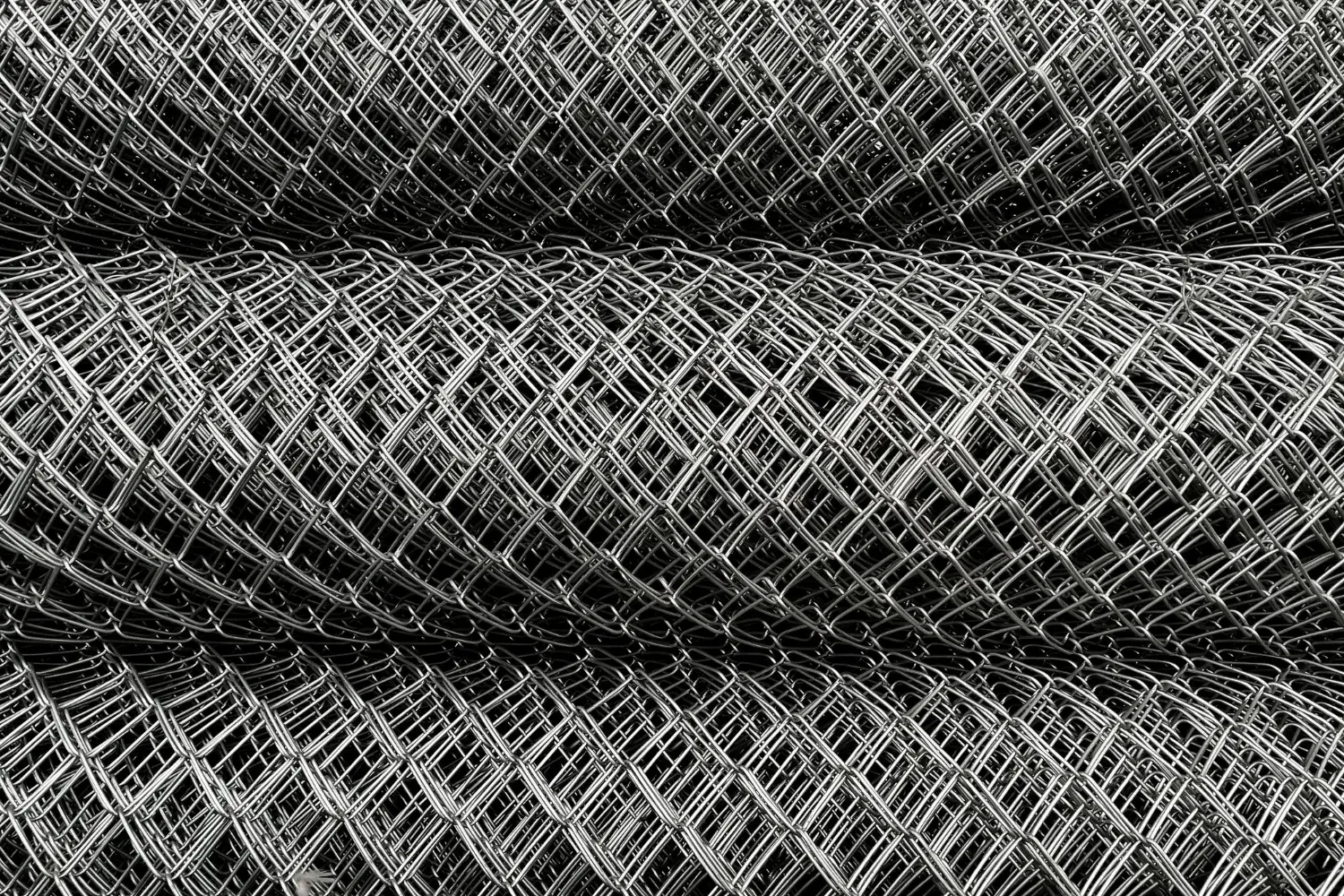
- Chain link
- Other reinforcement products
Sachi Wires currently includes both binding wire and hard drawn wire within its wire-product portfolio.
Bulk Supply Capability
For major construction projects, supply continuity can matter as much as the product itself.
Before selecting a supplier, buyers should determine:
- How much material can be supplied per order?
- Can repeat orders be fulfilled?
- What is the expected lead time?
- Can deliveries be phased according to project requirements?
- Can the manufacturer maintain specification consistency?
These questions help distinguish a project-oriented manufacturer or supplier from a purely spot-market seller.
What Specifications Should You Check Before Buying Binding Wire?
A proper purchase enquiry should provide enough information for manufacturers to quote the same product specification.
Wire Material
Confirm whether the requirement is for:
- Mild steel
- Annealed mild steel
- Galvanized wire
- Stainless steel
- Another specified material
For conventional reinforcement tying, annealed mild-steel binding wire is widely used.
Wire Diameter
Specify the required diameter or gauge.
If the project documents use SWG, it is useful to request the corresponding diameter in millimetres as well.
This avoids confusion when comparing quotations.
Finish
The finish may be:
- Black annealed
- Galvanized
- Other specified coating or finish
The correct option depends on the application and project specification.
Coil or Bundle Weight
Packaging can vary between manufacturers.
Common commercial listings include 25 kg and 50 kg packaging, while some suppliers offer other configurations depending on the product and order.
For large projects, the packaging format should be selected based on site handling and consumption.
Applicable Standard
If a project specifies a standard, the manufacturer should clearly identify the standard applicable to the quoted product.
For example, current Indian market listings for annealed binding wire commonly reference IS 280.
The buyer should still confirm the exact specification required by the project's consultant or procurement documents.
Black Annealed Binding Wire vs GI Binding Wire
One of the common purchasing decisions is whether to use black annealed/MS binding wire or galvanized binding wire.
Black Annealed Binding Wire
Black annealed wire is widely used for conventional reinforcement tying because it offers the flexibility required for manual tying.
It is commonly associated with:
- RCC reinforcement
- Columns
- Beams
- Slabs
- Foundations
- Reinforcement cages
GI Binding Wire
GI binding wire has a zinc coating that provides additional corrosion protection.
It can be considered where corrosion resistance is an important project requirement or where the wire is exposed to environmental conditions that justify the additional protection.
The decision should be based on the application and project specification rather than assuming that galvanized wire is automatically required for every construction project.
Sachi Steel also addresses the distinction between MS and GI binding wire in its dedicated comparison content, helping buyers understand how finish and application affect product selection.
Which Binding Wire Gauge Is Commonly Used in India?
Binding wire is available in multiple gauges.
Common commercial offerings include sizes such as:
- 16 SWG
- 18 SWG
- 20 SWG
- 21 SWG
- 22 SWG
The actual range depends on the manufacturer and product specification. Current Indian listings show suppliers offering multiple gauge options for construction applications.
However, there is no single gauge that should automatically be called the "best binding wire."
The appropriate diameter depends on:
- Reinforcement configuration
- Bar diameter
- Tying method
- Project specification
- Worker preference
- Required workability
For a more detailed explanation of common gauges, see Sachi Steel's guide to 16 SWG, 18 SWG and 20 SWG binding wire.
How Much Binding Wire Does a Construction Project Need?
Binding wire consumption varies depending on the reinforcement design, tying method, bar arrangement and construction process.
There is therefore no universal quantity that applies to every project.
For accurate procurement, contractors should consider the actual reinforcement quantity and project-specific tying requirements rather than relying blindly on a generic consumption figure.
Sachi Steel has also published a dedicated guide on how much binding wire is required for 1 ton of steel, which can be used as a starting point for project planning.
For large projects, actual consumption should ultimately be reconciled with site requirements and reinforcement drawings.
Binding Wire Manufacturers vs Binding Wire Suppliers in India
The terms manufacturer and supplier are often used interchangeably online, but they can represent different business models.
A manufacturer produces or processes the wire.
A supplier may manufacture the product, distribute another manufacturer's product, or combine both activities.
Neither model is automatically suitable or unsuitable.
For a large project, the important questions are:
- Who actually manufactures the product?
- Where is it produced?
- What specifications are available?
- Can the supplier maintain consistent batches?
- What quantity can be supplied?
- Can the supplier provide repeat deliveries?
- What is the delivery network?
- What documentation is available?
Understanding this distinction can help procurement teams compare quotations more accurately.
Major Binding Wire Manufacturing and Supply Markets in India
Binding wire is supplied across India's major construction and industrial markets.
Large construction-material ecosystems exist around cities and industrial regions such as:
- Ahmedabad and Gujarat
- Mumbai and Maharashtra
- Delhi-NCR
- Bengaluru and Karnataka
- Chennai and Tamil Nadu
- Hyderabad and Telangana
- Kolkata and West Bengal
- Pune
- Rajasthan
- Madhya Pradesh
- Other industrial and infrastructure centres
The relevant factor for a project buyer is not necessarily whether a manufacturer is located in the same city.
Instead, procurement teams should evaluate manufacturing capability, logistics, delivery timelines, order quantity and consistency of supply.
For a project operating across multiple locations, a supplier with an established regional supply network can be more practical than choosing a manufacturer solely based on geographic proximity.
Why Bulk Binding Wire Supply Is Different From Retail Procurement
A retail buyer may need a relatively small quantity of binding wire for a local construction activity.
Large contractors operate differently.
A major project may require continuous supply over several months, with material delivered according to reinforcement schedules.
This creates additional procurement requirements:
Consistent Batch Specifications
Each delivery should correspond to the approved specification.
Planned Replenishment
The supplier should be capable of handling repeat requirements.
Project-Wise Packaging
Packaging should be practical for handling and storage at site.
Delivery Coordination
Material may need to reach different project locations or arrive according to construction schedules.
Commercial Stability
Bulk buyers should compare the complete delivered cost rather than looking only at the headline per-kilogram rate.
What Should You Ask a Binding Wire Manufacturer Before Placing a Bulk Order?
Before finalising a manufacturer or supplier, procurement teams should ask:
What is the exact wire specification?
Confirm material, diameter, finish and applicable standard.
What gauges are available?
Ask for the actual nominal diameter alongside gauge terminology.
Is the wire annealed?
For applications requiring manual tying, confirm the required workability.
What are the available packing sizes?
This helps with site storage and handling.
What quantity can be supplied?
Confirm both immediate and recurring supply capability.
Can the manufacturer support repeat orders?
This is important for long-duration projects.
What is the delivery schedule?
Establish expected lead times before placing the purchase order.
Can the supplier provide other reinforcement products?
For large projects, this can reduce the number of vendors involved in reinforcement procurement.
Why Sachi Steel for Binding Wire in India?
Sachi Steel's binding wire offering sits within a broader construction-material and reinforcement ecosystem rather than operating as an isolated wire product.
The company's Sachi Wires portfolio includes binding wire and hard drawn wire, with binding wire positioned for rebar tying, foundation cages, boundary meshes and general construction fastening.
The wider Sachi Steel business has developed from a Gujarat-based steel supply background into manufacturing, processing and construction-material solutions.
According to Sachi Steel's current company information, its operations expanded into large-scale supply and processing of TMT bars, binding wire and weld mesh, followed by automated Cut & Bend facilities and precision coupler systems.
The company currently offers a wider portfolio including:
- Tata Tiscon TMT Bars
- Cut & Bend Reinforcement
- Reinforcement Couplers
- Weld Mesh
- Binding Wire
- Chain Link Fencing
- Bore Pile Cages
This wider portfolio is relevant to contractors because binding wire is normally procured as part of a larger reinforcement workflow.
Sachi Steel's Gujarat Manufacturing and Supply Base
Sachi Steel has its roots in Gujarat's construction and steel market, with its current business based in Ahmedabad.
The company describes its evolution from an initial steel trading and supply operation into large-scale supply, processing and manufacturing-oriented construction solutions.
For Gujarat projects, this creates a product ecosystem covering reinforcement steel, reinforcement fabrication and wire products.
For projects outside Gujarat, buyers should evaluate delivery feasibility, order quantities and project-specific logistics directly with Sachi Steel.
This distinction is important: being an India-focused construction-material brand does not require making unsupported claims about national market share or calling a company India's largest manufacturer. Instead, a manufacturer can establish its credibility through documented products, manufacturing capabilities, technical specifications and project-oriented supply.
What Makes Sachi Steel Relevant to Large Construction Projects?
For contractors evaluating binding wire manufacturers, the value of a supplier can extend beyond the wire itself.
A large reinforcement project may require:
- TMT bars
- Binding wire
- Cut & Bend reinforcement
- Couplers
- Weld mesh
- Bore pile cages
Sachi Steel's portfolio covers these interconnected categories.
For example, Cut & Bend reinforcement can support projects where reinforcement is prepared according to structural requirements, while Bore Pile Cages address prefabricated reinforcement requirements for deep foundations.
Similarly, Weld Mesh and Binding Wire cover different parts of the reinforcement and construction workflow.
This broader product ecosystem allows Sachi Steel to participate in construction-material procurement beyond a single commodity category.
How to Compare Binding Wire Manufacturers in India
Before choosing a manufacturer, create a specification-based comparison rather than simply collecting the lowest quotations.
Check:
- Product specification
- Wire diameter
- Gauge
- Material
- Annealing
- Finish
- Applicable standard
- Packaging
- Quantity availability
- Manufacturing capability
- Batch consistency
- Delivery capability
- Repeat-order support
- Project experience
- Related product availability
This approach makes manufacturer comparisons more meaningful and reduces the risk of selecting a product based purely on price.
Frequently Asked Questions
Who are the top binding wire manufacturers in India?
There are multiple manufacturers and suppliers serving India's construction market, ranging from dedicated wire manufacturers to large steel companies and regional construction-material businesses. Buyers should compare manufacturers based on specification, manufacturing capability, consistency, bulk supply and delivery rather than relying on an arbitrary ranking.
Which company manufactures binding wire in India?
Binding wire is manufactured by multiple Indian companies. Sachi Steel supplies binding wire through its Sachi Wires portfolio, alongside other reinforcement and wire products.
What is the standard for binding wire in India?
Indian market listings for annealed mild-steel binding wire commonly reference IS 280. The exact applicable specification should be confirmed against the requirements of the individual project.
What gauge binding wire is used for TMT bars?
Multiple gauges are available for reinforcement tying, including 16, 18, 20 and other sizes. The appropriate gauge depends on the reinforcement arrangement and project requirements.
Is black annealed wire the same as binding wire?
Black annealed wire is commonly used as binding wire for construction reinforcement. The exact product specification, diameter and finish should be confirmed with the manufacturer.
What is the difference between a binding wire manufacturer and supplier?
A manufacturer produces or processes the wire, while a supplier may manufacture, distribute or source the product from other manufacturers. For project procurement, buyers should verify the actual source, specifications and supply capability.
Can binding wire be purchased in bulk directly from a manufacturer?
Yes. Many Indian manufacturers and suppliers offer bulk quantities. For large projects, buyers should confirm production availability, packaging, delivery schedules and repeat-order capability before finalising the supplier.
Does Sachi Steel manufacture and supply other construction products?
Sachi Steel's current portfolio includes TMT, Cut & Bend, couplers, weld mesh, binding wire, chain link fencing and bore pile cages.
Conclusion
Finding a suitable binding wire manufacturer in India requires more than searching for the lowest price or choosing a company from a generic supplier directory.
For construction and infrastructure projects, buyers should look at the complete picture: wire specification, diameter, workability, manufacturing consistency, applicable standards, packaging, bulk availability, delivery capability and long-term supply support.
Binding wire may be a relatively small component of a construction project, but it forms an essential part of the reinforcement process. A reliable supply of consistent material can therefore become an important part of project procurement.
Sachi Steel brings binding wire into a wider construction-material ecosystem that includes TMT reinforcement, Cut & Bend, couplers, weld mesh, bore pile cages and fencing. Its Gujarat-based steel and construction-material operations provide a foundation for serving project-oriented requirements, while individual delivery and quantity requirements can be evaluated according to the project.
For builders, contractors, infrastructure companies and procurement teams searching for binding wire manufacturers and bulk suppliers in India, the right approach is to compare documented specifications and supply capabilities rather than relying on an arbitrary "top manufacturer" ranking.